
Last updated November 15, 2026
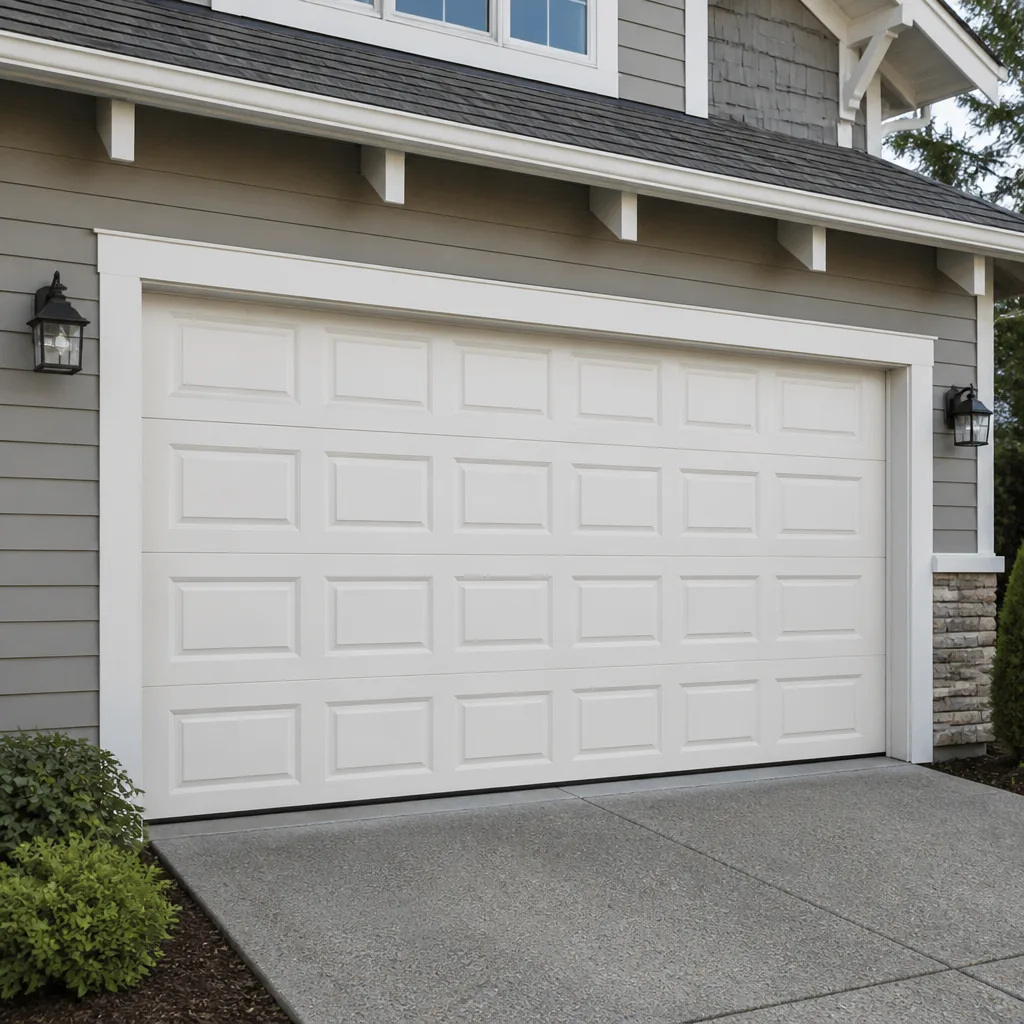 Raised-panel steel
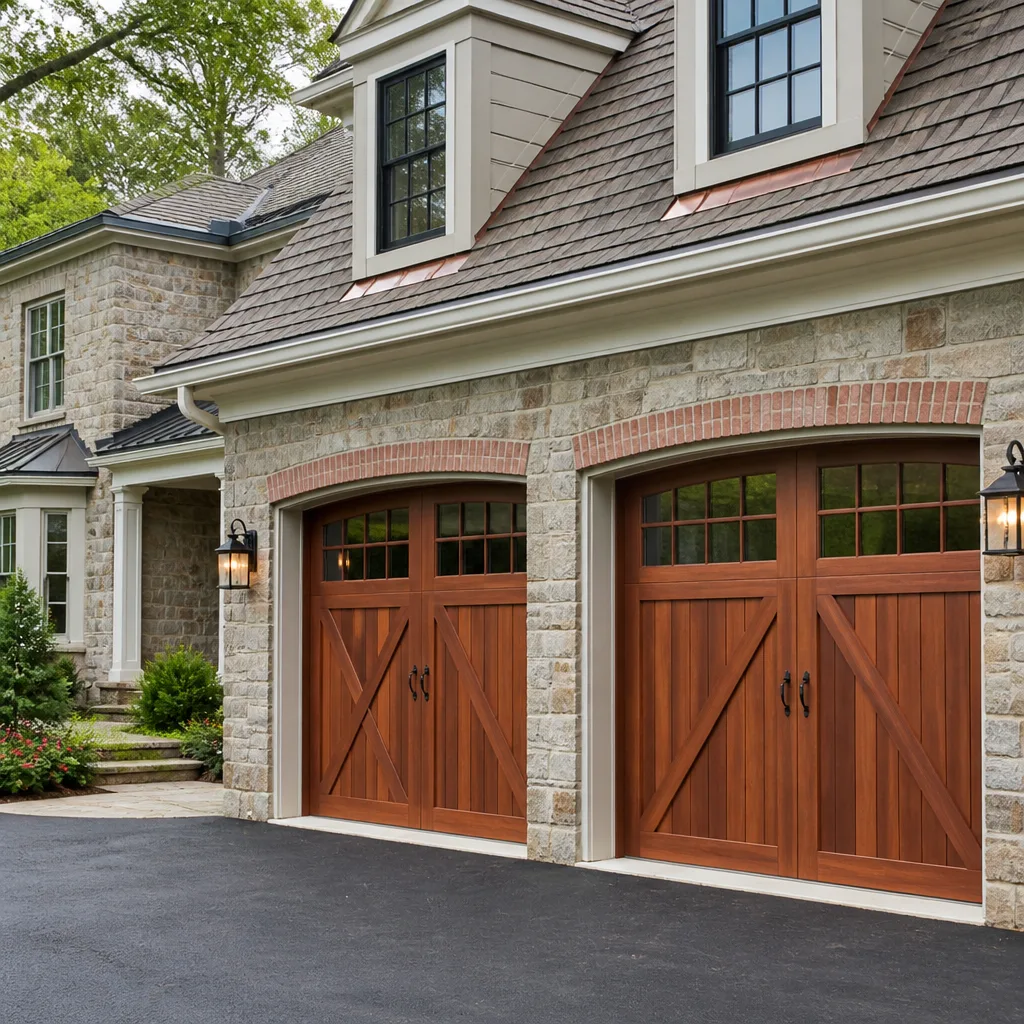 Carriage house
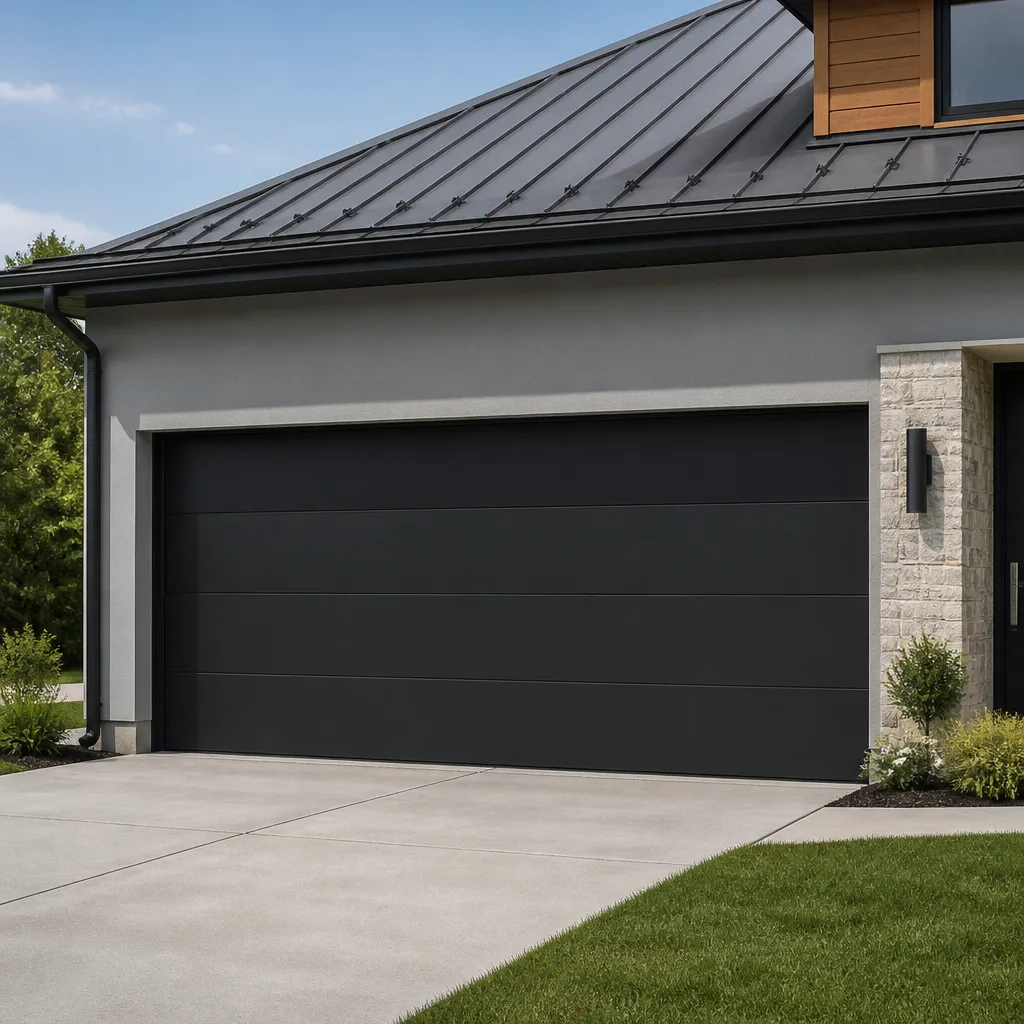 Modern flush
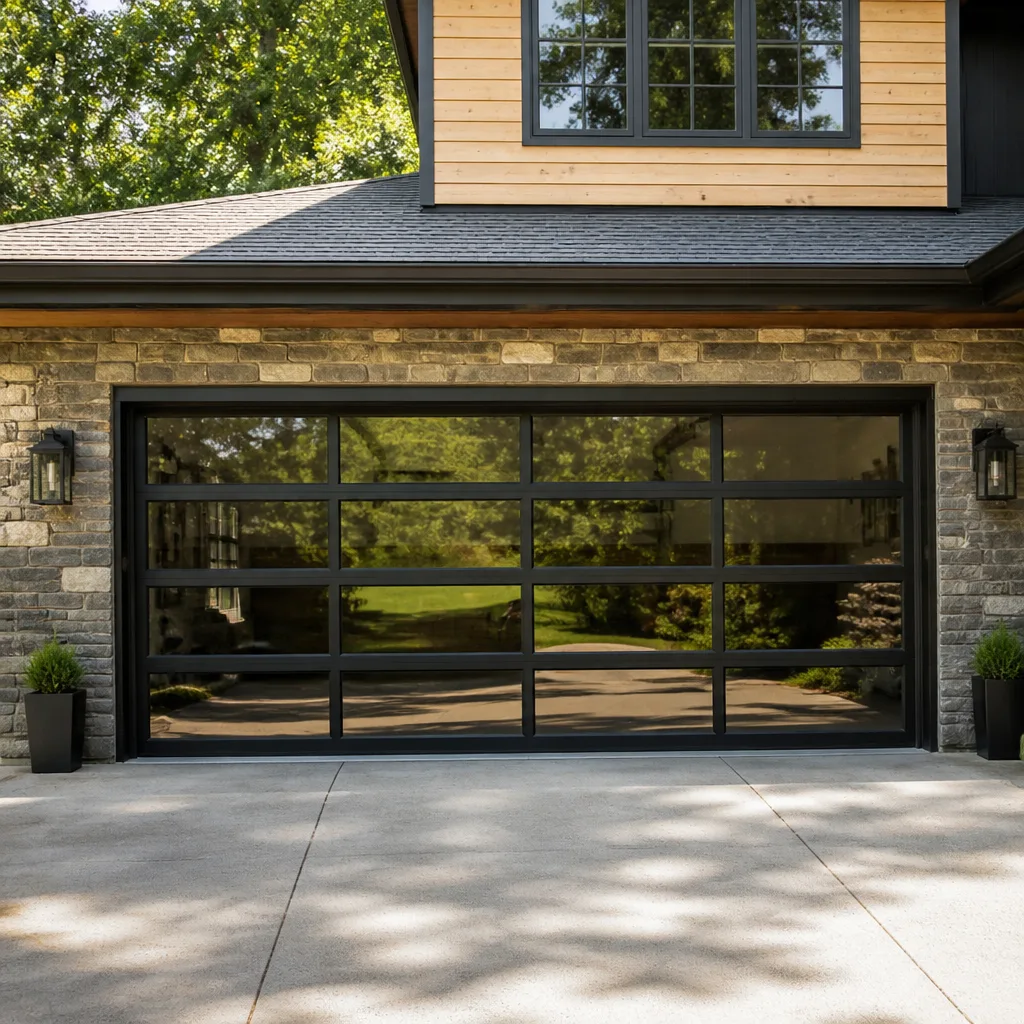 Full-view glass
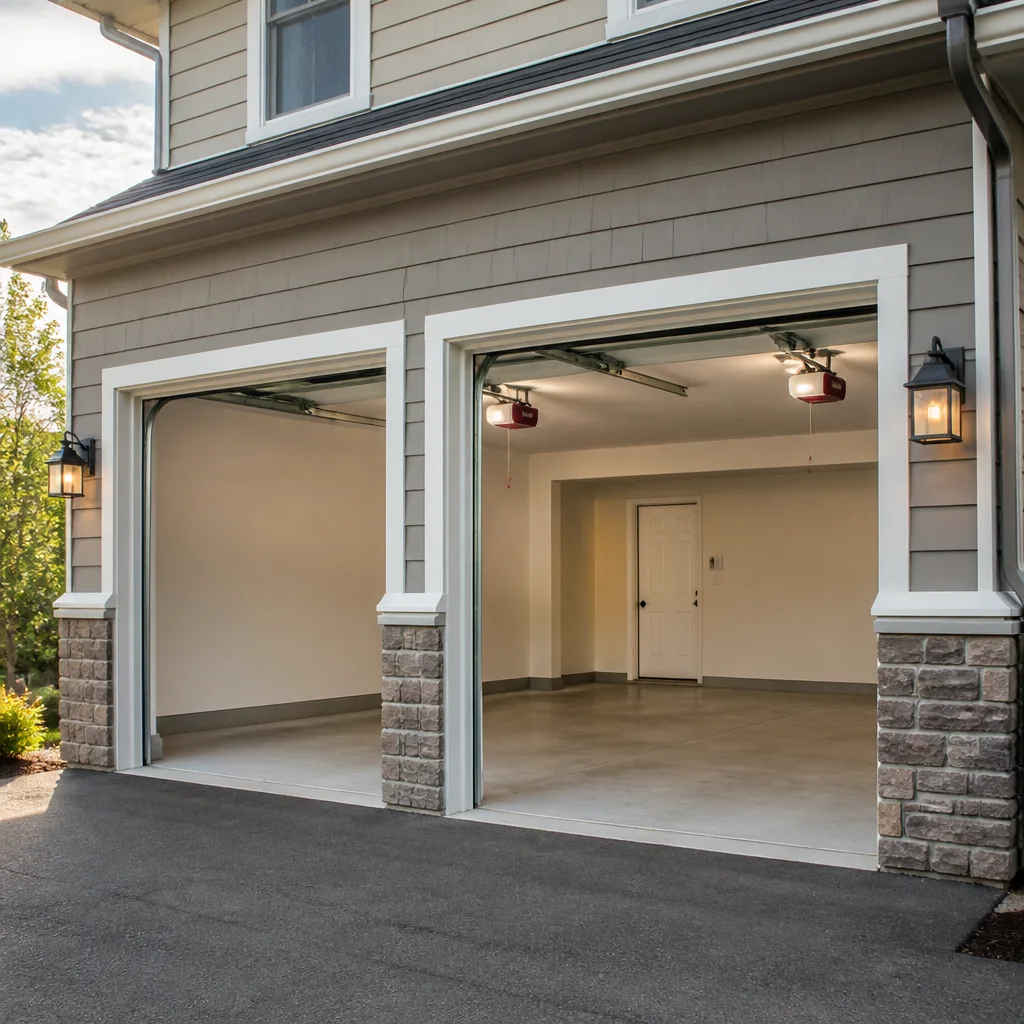 LiftMaster openers
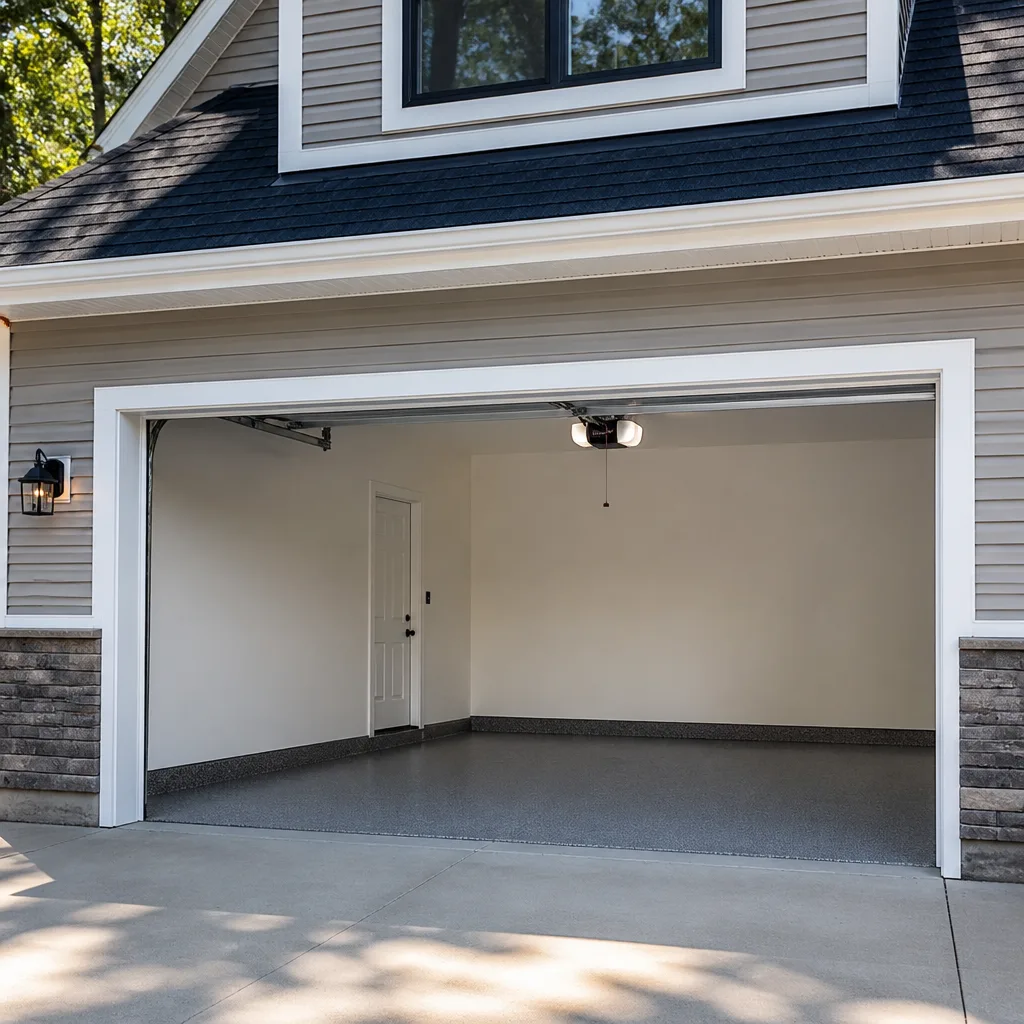 Chamberlain openers
Full 25-point door and opener safety check with every visit - springs, cables, rollers, tracks, and your LiftMaster or Chamberlain opener included
You get a price before we start. It does not change when the pro arrives.
Get your free estimateThe Complete Guide to Garage Doors in Boulder
Most garage door guides are written for a mythical average American home: sea level, mild seasons, one climate fits all. Boulder isn’t that place. This city sits at roughly 5,430 feet, where intense high-altitude sun bleaches finishes and hardens rubber seals faster than most manufacturers expect, and where freeze-thaw cycling works on hardware every winter. Add neighborhoods where the HOA weighs in before the door goes up, and a garage door here lives a different life than the same door in Ohio. This guide covers what actually matters for a Boulder garage: how altitude and UV affect your door, which materials hold up, HOA approval steps, permit differences between the city and the county, and when a repair beats a replacement.
Quick Answer
A garage door in Boulder needs a UV-tolerant finish, weatherstripping checked at least twice a year, and hardware tightened against the seasonal movement that freeze-thaw cycling causes at 5,430 feet. Before replacing a door, confirm whether your address is inside Boulder city limits or unincorporated Boulder County (the permit process differs) and whether your neighborhood has HOA design rules. For anything involving springs, cables, or opener wiring, call a trained technician rather than attempting it yourself.
Styles & brands we work with
- Raised-panel steel
- Carriage house
- Modern flush
- Full-view glass
- LiftMaster openers
- Chamberlain openers
Table of Contents
- How Boulder’s Altitude and Sun Affect Garage Doors
- Which Garage Door Materials Perform Best in Boulder
- HOA Approval in Gunbarrel, Table Mesa, and Mapleton Hill
- City of Boulder vs. Boulder County Permits
- Doors for Garages That Double as Workshops or EV Charging
- Repair or Replace? A Decision Guide
- Openers and Smart Home Systems in Boulder Homes
- A Seasonal Garage Door Check for Boulder
- What Garage Door Work Costs in Boulder
How Boulder’s Altitude and Sun Affect Garage Doors
Boulder gets around 300 days of sun a year, and at 5,430 feet the ultraviolet intensity is meaningfully higher than at lower elevations. That combination is the single biggest factor in how a garage door ages here. Paint and stain chalk and fade faster. Rubber weatherstripping dries, cracks, and shrinks. Plastic trim and window frames go brittle. A door that would look fresh for a decade at lower altitude may start showing sun wear noticeably sooner on a south- or west-facing wall in Boulder.
The second factor is temperature swing. Boulder’s freeze-thaw cycling means moisture creeps into seams and small gaps during the day and freezes at night. Over a winter, that cycle loosens fasteners, works at the bottom seal, and can let water pool where the door meets the slab. The sun does the damage from above and the cold does it from below, which is why a two-sided inspection matters.
What this means in practice:
- Finishes need more UV protection than a generic exterior product provides. Look for a coating rated for high-altitude sun exposure.
- Weatherstripping on the sides and bottom is a wear item here, not a lifetime part. It should be checked in spring and again before winter.
- Metal hardware, hinges, and rollers benefit from periodic lubrication to keep the freeze-thaw cycle from seizing moving parts.
- Wood doors need repainting or restaining on a shorter interval than the manufacturer’s general guidance suggests, because that guidance assumes milder sun.
If you notice a bottom seal that has gone stiff and doesn’t flatten against the floor, water and cold air get in. That’s a cheap fix caught early and a bigger one if it’s ignored through a winter.
Which Garage Door Materials Perform Best in Boulder
Steel doors are the most common choice in Boulder and the most practical for most homes. Modern insulated steel handles sun, snow, and freeze-thaw better than wood and needs almost no upkeep. The finish is what determines lifespan: a factory-baked, UV-stable finish resists the sun far better than field-painted steel. When you buy, ask specifically about the finish warranty rather than just the door warranty, because they’re different.
Wood doors are beautiful and common on older homes around Mapleton Hill, where historic character is part of the point. They also demand the most maintenance in this climate: repainting or restaining on a shorter cycle, checking for checking and splitting at the joints, and watching the bottom edge where snow and meltwater sit. If you own a wood door in Boulder, treat its finish as a maintenance item you budget for.
Composite and fiberglass doors split the difference. They resist moisture and sun reasonably well, don’t rust, and hold paint. Some composites mimic wood grain closely, which makes them viable where an HOA or historic standard calls for a wood look but you’d rather not maintain real wood.
Insulation is worth talking about separately. Many Boulder garages are attached and share a wall with living space or a room above. An insulated door slows heat transfer, keeps the garage more stable in winter, and cuts noise. If your garage is unconditioned, a basic insulated door still helps; if it’s semi-conditioned or used as a workspace, insulation matters more.
- Insulated steel: best all-around for sun, cold, and low maintenance.
- Wood: best for historic character, highest maintenance.
- Composite/fiberglass: good sun and moisture resistance, moderate cost, holds finish well.
- Aluminum with glass: modern look, lower insulation, popular on contemporary builds.
HOA Approval in Gunbarrel, Table Mesa, and Mapleton Hill
In Boulder, what the HOA will accept often decides the door before you ever pick a color. Gunbarrel, Table Mesa, and Mapleton Hill each carry their own expectations, and ignoring the association’s design review is one of the most expensive mistakes in this process – a door that has to come back off the wall because it wasn’t approved. The rule of thumb: get written approval before you order, not after.
Start with the covenants, conditions, and restrictions (CC&Rs) for your subdivision. These usually spell out approved colors, panel styles, and sometimes materials. Then submit whatever design review application the association requires, with the specific door you intend to buy. In historic or design-review neighborhoods like parts of Mapleton Hill, the review can also involve a city design or historic review, and that adds a step. It’s not unusual for a replacement to take longer than the installation itself for that reason.
- Read your CC&Rs and any architectural guidelines. Note approved colors, styles, and materials.
- Identify whether your neighborhood has a separate design or historic review process beyond the HOA.
- Choose a door that meets the written rules, not just the general look of the street.
- Submit the design review application with the exact model, color, and finish you plan to install.
- Keep the written approval on file, including any conditions in the letter.
- Only then order the door. Special-order configurations can’t be returned to the supplier easily.
A matched door across a row of townhomes is often what the association is really protecting. Being able to say “this matches the approved plan” shortens the conversation considerably.
City of Boulder vs. Boulder County Permits
A garage door replacement may require a permit in Boulder, and the process depends on whether your address is inside the city limits or in unincorporated Boulder County. The two jurisdictions run their own building departments and their own review steps, so a permit that’s straightforward in one isn’t automatically the same in the other. The practical move is to ask your city’s or county’s building department before work is scheduled. Ask specifically whether a like-for-like replacement needs a permit, what the submittal requires, and how long review typically takes.
Structural changes are the clearer case. If the project involves enlarging the opening, altering the header, changing the wall structure, or converting the garage, assume a permit and an inspection apply. A simple same-size door swap is often simpler but not always exempt, especially where the door is part of a rated assembly or a design-review neighborhood. When in doubt, the building department’s answer is the one that counts, not a neighbor’s recollection.
- Inside city limits: contact the City of Boulder building department for permit applicability and submittal requirements.
- Unincorporated Boulder County: contact Boulder County’s building department separately; the requirements can differ from the city’s.
- Structural changes: expect a permit and inspection regardless of jurisdiction.
- Design-review neighborhoods: add the review step on top of any permit, not instead of it.
For a repair, permitting is rarely involved unless the work changes structure. For a full replacement, make the permit question part of your planning before you choose a date. We can talk through what a typical Boulder replacement involves, but the jurisdiction’s building department makes the final call.
Doors for Garages That Double as Workshops or EV Charging
Plenty of Boulder garages aren’t just parking. They’re workshops, home gyms, bike storage, and increasingly EV charging bays. That changes the door conversation. For a garage that’s actually used as a room, insulation and sealing matter more than curb appeal. An insulated door with good perimeter seals holds temperature better, keeps out dust and cold air, and cuts the noise of an opener or a tool running inside.
For an EV charging setup, the door itself doesn’t charge anything, but a well-sealed insulated door keeps the space usable and protects equipment from cold. If your garage shares a wall with the house, insulation reduces how much of the garage’s cold finds its way into the living space. It also keeps summer heat from baking a garage that holds electronics, chargers, and tools.
Brand familiarity helps here because spec sheets vary. We work with insulated doors from Clopay and Amarr, among others, and know how their insulation ratings translate into a real-feel difference in an attached garage. On the opener side, smart-home-compatible systems from LiftMaster and Chamberlain connect to common home automation platforms, which matters if you want the door to be part of a connected setup. Specifics vary by model, so check the product documentation rather than a generic claim.
- Decide how the garage is actually used: parking only, workshop, gym, or EV bay.
- Choose an insulation level that matches that use – higher for a room you spend time in.
- Plan perimeter seals and a bottom threshold that hold up to freeze-thaw cycling.
- If adding a smart opener, confirm compatibility with your home’s automation platform.
- Ask about noise – insulated doors and belt-drive openers run quieter in a shared space.
Repair or Replace? A Decision Guide
Not every problem needs a new door, and a few of them shouldn’t be treated as repairs. The core question is whether the door’s structure is sound. A door that binds, runs noisily, or has a failed opener or worn rollers is usually a repair. A door with a bent track section, cracked panel, or failing structural hardware may be better replaced, and that’s a judgment made after inspection rather than from a description over the phone.
One repair is different from all the others. Torsion springs and the cables that run with them are under high tension, and they can and do cause serious injury. Never attempt to adjust, remove, or replace a spring or cable yourself. The same goes for anything involving the opener’s electrical wiring or the home’s electrical panel. Those are jobs for a trained technician, full stop.
Here’s how we think through the decision. A typical Boulder door that binds or runs rough on one side gets inspected first: rollers, hinges, and track alignment are adjusted or replaced, and it’s often fine. An opener that reverses, won’t close, or loses its remote signal is a separate diagnostic, and sometimes both issues exist at once. That’s why a specialist who handles both the mechanical door and the electronic opener resolves it in one visit rather than two.
- Repair: worn rollers, noisy operation, opener not responding, misaligned sensors, weatherstripping, loose hinges.
- Replace: cracked or rusted-through panels, a consistently bent track, structural hardware failure, an aging door whose repair cost approaches replacement.
- Professional only: springs, cables, and opener electrical work. These are not homeowner tasks.
For an exact quote on either path, our garage door repair team inspects first and prices the job before any work starts.
Openers and Smart Home Systems in Boulder Homes
Most opener problems aren’t actually door problems, and the reverse is also true. A door that reverses immediately, opens halfway and stops, or won’t respond to the remote is sometimes a sensor or logic board issue and sometimes a mechanical bind that the opener is correctly reacting to. Separating the two is the whole diagnostic. That’s why we treat the door and the opener as one system – diagnosis before parts, so you aren’t replacing an opener that was fine.
Boulder homes run a mix of openers, leaning heavily on brands that have been installed here for years: LiftMaster and Chamberlain for current smart-compatible systems, and Genie and Craftsman for a lot of existing equipment. Familiarity with a specific brand’s common failure points saves time. When we know the model, we know which components typically wear first and which parts are correct for it, rather than guessing from a model number on a sticker after the fact.
If you’re considering a new opener with smart-home features, confirm three things before you buy: compatibility with your home automation platform, whether it needs a separate bridge or hub, and whether the safety sensors will work with your current door. For an existing opener not responding to a remote, start with the simple checks before assuming the unit is dead:
- Check that the safety sensors are aligned and the indicator light is steady, not blinking.
- Look for a physical bind: try the manual release and see if the door moves freely by hand.
- Replace the remote battery and re-test.
- Check for a wall-switch issue versus a remote-specific issue.
- If the above don’t resolve it, call for diagnostics rather than opening the motor housing.
When an opener needs replacement or a thorough diagnostic, our garage door opener repair service covers the major brands and the electronics behind them.
A Seasonal Garage Door Check for Boulder
Because Boulder throws sun and freeze-thaw at the door, a twice-a-year check heads off most expensive failures. Do the spring check when the season turns, and have a technician address anything on the mechanical side you’re unsure about. This is a what-to-check list, not a repair manual – leave tension adjustments to the professionals.
- Weatherstripping and bottom seal. Look for cracks, stiffness, or gaps at the floor. Replace when it no longer flattens cleanly.
- Finish. Check for chalking, fading, or peeling on south- and west-facing doors. Touch up or repaint before bare material shows.
- Hardware. Look for loose hinges and fasteners, especially after a hard freeze. Lubricate moving metal parts per the manufacturer’s guidance.
- Balance test. Release the opener and lift the door to about halfway by hand. A properly balanced door stays put; one that drops or springs up needs attention.
- Sensors and opener. Confirm the safety sensors are aligned and the auto-reverse works as it should.
- Track and panels. Spot any bent track, cracked panel, or rust that’s worse than cosmetic.
The bottom seal check matters most in Boulder. That’s where meltwater collects and where cold air gets in. A worn bottom seal is a small replacement; a door that’s let water in through the winter can turn into a bigger repair. For doors with visible finish wear, plan to repaint on a tighter cycle than the label says. For a fuller walkthrough of whether a fix is needed, see Boulder Garage Door Service and how we handle inspections.
What Garage Door Work Costs in Boulder
Garage door costs in Boulder vary with the size of the opening, the material, the insulation level, and how much of the work is repair versus replacement. Every price we give is quoted and agreed before any work starts, and the written estimate sets the final price. That matters in a market where a vague phone quote and a surprise invoice is the thing most homeowners are worried about.
The clearer a job is scoped, the more accurate the estimate. A repair of a specific component prices differently from a full door replacement with HOA design review and permit. We can’t responsibly quote a number here that applies to every home and door, so the written estimate is where the real number lives. What we can tell you is how the price gets built:
- Door type and size. Single-car and double-car, insulated and non-insulated, all price differently.
- Material. Insulated steel, composite, and wood sit at different price points and carry different maintenance costs.
- Opener. A basic replacement versus a smart-compatible model changes the total.
- Preparation. HOA approval, permit review, and any track or structural work add time and cost.
- Repair scope. One failed component is a repair; several at once can make replacement the better value.
For sizing a full replacement, the best first step is a free estimate at your home. We measure, confirm the configuration, and quote it in writing. If the door is in Boulder, we can talk through what your specific setup needs – just call (855) 683-6002 for a free estimate.
Common Mistakes to Avoid
- Skipping HOA approval before ordering. In Gunbarrel, Table Mesa, and Mapleton Hill, the design review can take longer than the install. Order first and you risk a door you can’t hang.
- Treating a bottom seal as a lifetime part. In Boulder’s freeze-thaw cycle, weatherstripping dries and cracks. Waiting for visible water inside is waiting too long.
- Repainting steel with a generic exterior product. The high-altitude sun breaks down lower-grade finishes quickly. Use a UV-rated coating or the factory finish will outlast your repaint.
- Assuming the city and the county are the same. Permit requirements for a replacement differ between the City of Boulder and unincorporated Boulder County. Ask the right building department.
- Diagnosing an opener as dead too fast. A door that reverses or won’t close is often a safety sensor or mechanical bind, not a failed motor. Get it diagnosed before you replace it.
- Blaming one brand for a door problem. A bind in the door shows up as opener behavior. Look at the whole system before assuming the opener is the cause.
- Ignoring a wood door’s finish. Wood looks best on older homes but needs repainting on a shorter cycle in this sun. Let it go and you’re replacing paneling, not repainting it.
See the difference
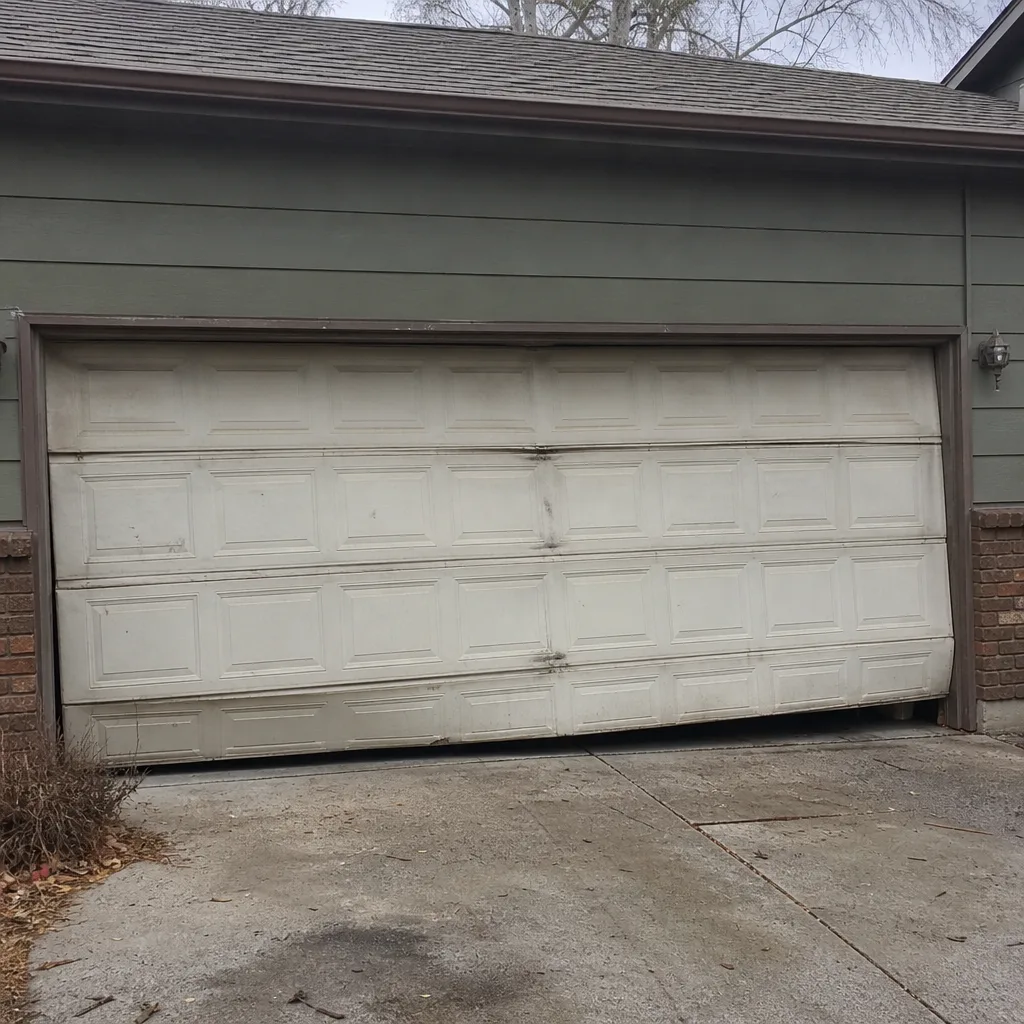 Before
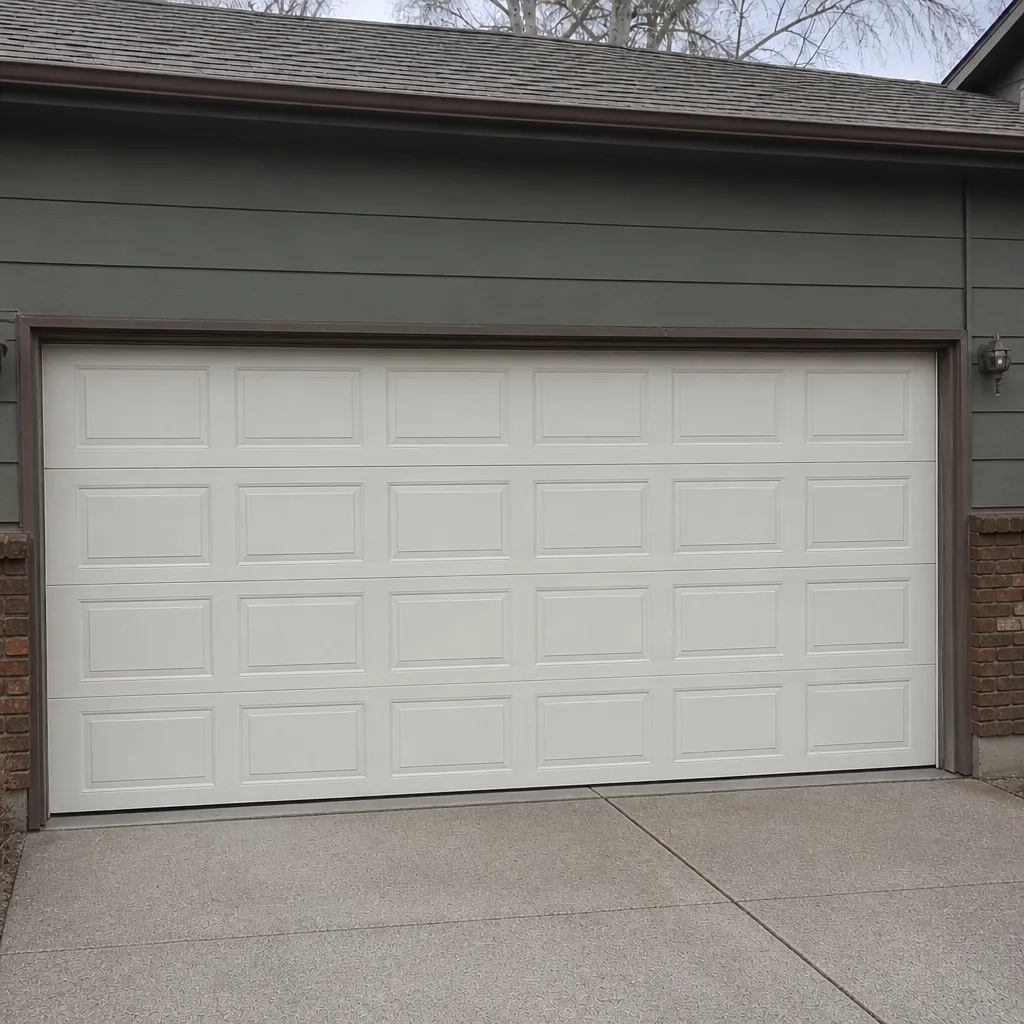 After
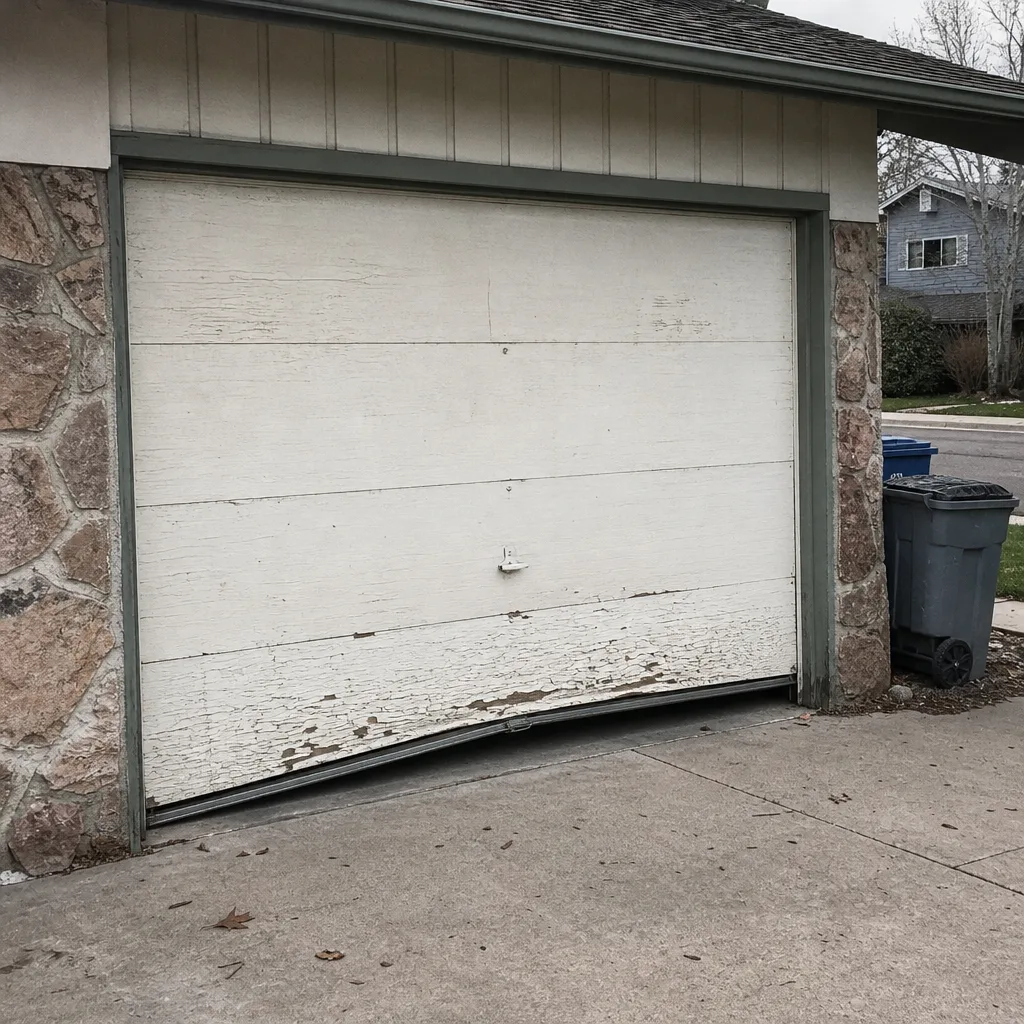 Before
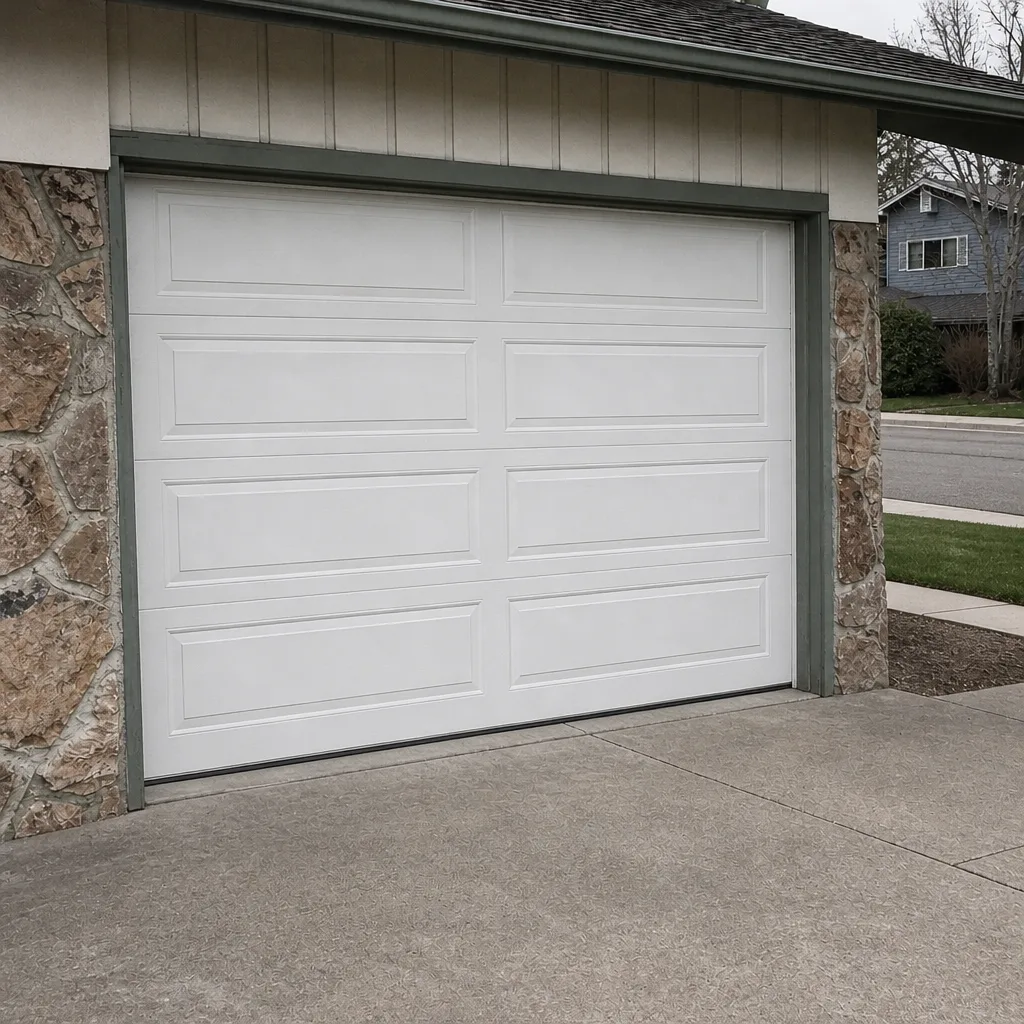 After
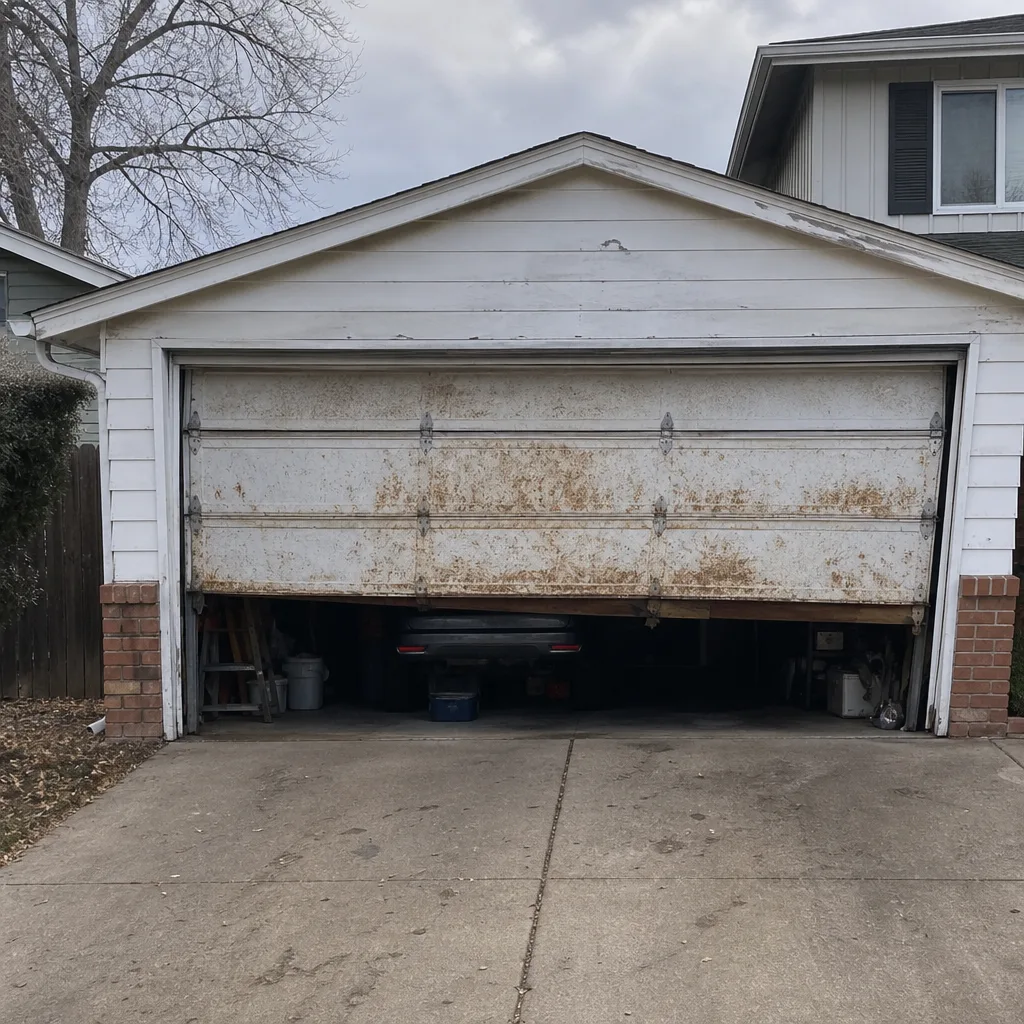 Before
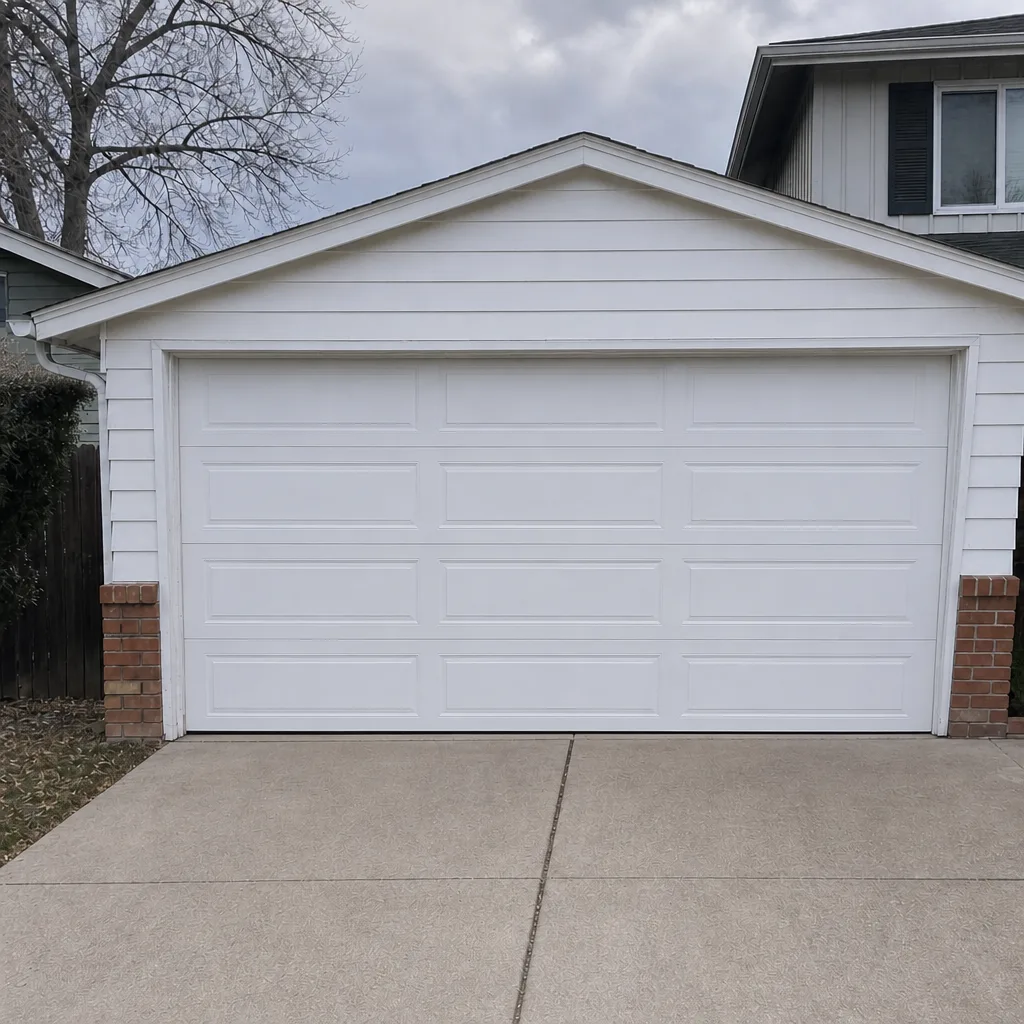 After
When to Call a Professional
Call a professional for anything involving a spring, cable, or the opener’s electrical wiring. Those carry real injury risk and are not a do-it-yourself project, no matter how straightforward the video makes it look. Call us if the door moves roughly, reverses, won’t close, or grinds – especially after a hard freeze. For a door that’s visibly out of alignment, cracked, or dropping on one side, call before using it again. Same-day service is often possible for repairs. For installations, replacements, and new doors, the work is measured, ordered, and scheduled, so a free estimate comes first. Boulder Garage Door Service offers free estimates in Boulder – call (855) 683-6002. We answer 24/7. Fast dispatch from 7am to 7pm, Sunday through Friday.
Frequently Asked Questions
Twice a year is the practical rhythm here, in spring and before winter, because altitude sun and freeze-thaw cycling work the seals, finish, and hardware harder than in milder climates. The checks are quick: weatherstripping, finish, hardware, balance, and sensor function. If you spot a gap at the bottom seal or a rough spot in the door’s travel, call (855) 683-6002 for an assessment – estimates are free.
It depends on your jurisdiction and the scope of the work. The City of Boulder and unincorporated Boulder County have separate building departments and their own review steps, so you need to ask the correct one. A same-size replacement is a different question from a structural change, which almost always needs a permit and an inspection. Confirm with the building department before scheduling, then call (855) 683-6002 for a free estimate on the work itself.
Insulated steel with a factory-baked, UV-stable finish handles high-altitude sun and freeze-thaw best with the least upkeep. Composite and fiberglass are solid options where you want a wood look without the maintenance. Real wood looks great on Mapleton Hill and similar historic homes, but it needs repainting or restaining on a shorter cycle in this sun. Call (855) 683-6002 to talk materials for your door – estimates are free.
Only your association can answer that, and the safe path is written approval before you order. Gunbarrel, Table Mesa, and Mapleton Hill each carry their own covenants and, in some areas, city design or historic review. Read the CC&Rs, identify any additional review process, and submit the design application with the exact door model and finish. For help matching an approval to a specific door, call (855) 683-6002.
That’s usually a safety sensor that’s out of alignment or obstructed, a travel-limit setting that’s off, or a mechanical bind the opener is reacting to. Don’t assume the motor is dead. Check the sensor indicator lights first, then call for diagnostics if the issue persists – the door and opener need to be looked at together. Call (855) 683-6002. We answer 24/7. Fast dispatch from 7am to 7pm, Sunday through Friday.
Often, yes – a binding door, a worn roller, or a sensor issue can usually be addressed in a single visit, and repairs are the kind of work we schedule same-day when we can. New installation and replacement are measured and scheduled instead, because the door has to be ordered and the work planned. Call (855) 683-6002 for a free estimate and to book the right path for your door.
The Bottom Line
Boulder is a demanding environment for a garage door. The altitude and the UV do the most predictable damage – sun on the finish, dry rot on weatherstripping, and freeze-thaw on hardware and seals – so maintenance is about timing those checks twice a year rather than treating the door as fit-and-forget. HOA approval and the city-versus-county permit difference are the two process steps that trip up the most replacements here, and getting them right before ordering saves the cost of a door you can’t hang. For insulation and any garage used as a workshop or EV bay, spend the money on the rating that fits the room. And for springs, cables, and opener wiring, leave it to a trained technician.
We handle the whole lifecycle – repair, opener diagnostics, and installation – so a single call covers the problem. If you want a written price before anything is ordered or adjusted, call Boulder Garage Door Service at (855) 683-6002 for a free estimate. We answer 24/7. Fast dispatch from 7am to 7pm, Sunday through Friday.
Written by the team at Boulder Garage Door Service.